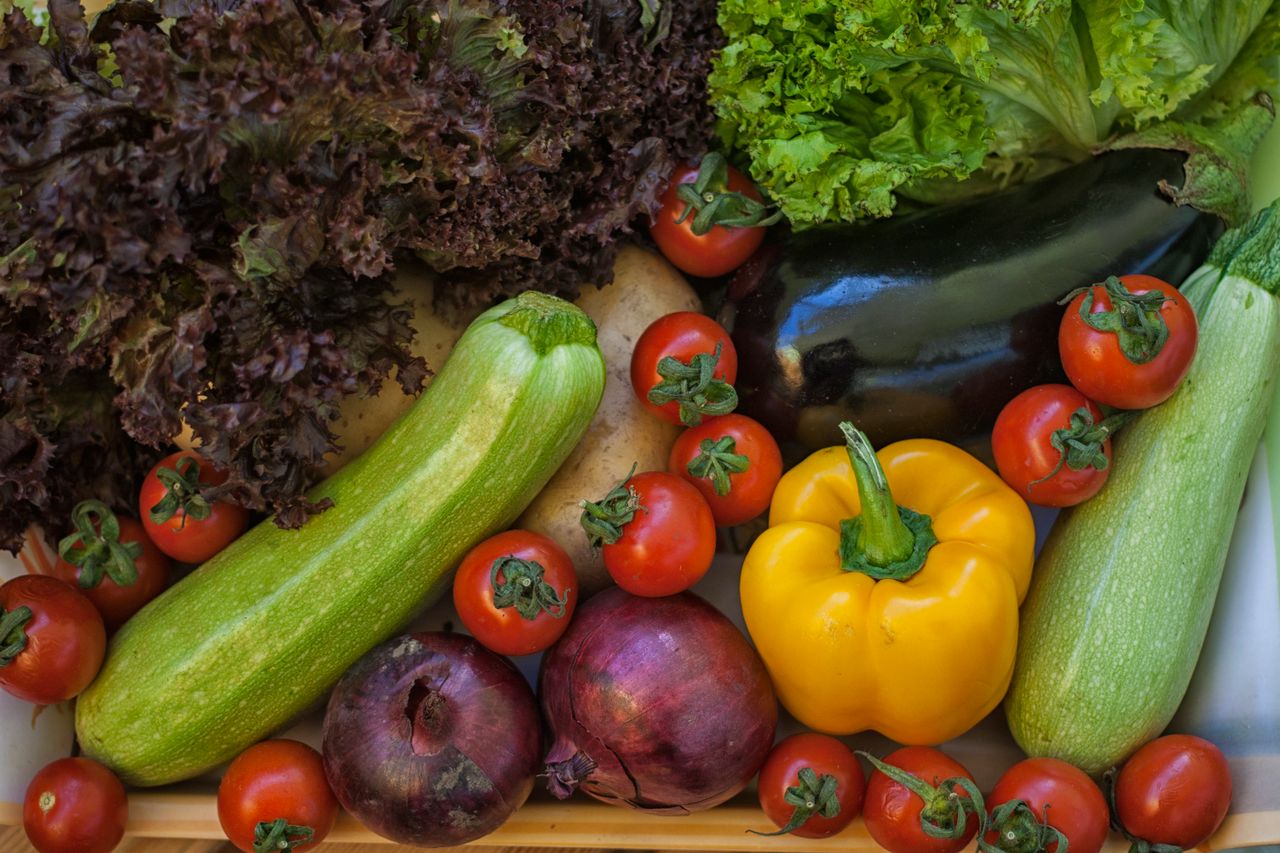
I love food.
I love growing it. I love cooking it. I love the smell of garlic hitting a hot pan and tomatoes still warm from the garden. I love meals that stretch longer than intended because nobody has gotten up from the table yet. I love trying food from places I’ve never been and eating things made by people who learned to make them from someone who came before them.
And perhaps because I work in health, I have also watched food become one of the most complicated things in people’s lives.
We worry about it. Track it. Restrict it. Optimize it. Feel guilty about it. Sneak it. Reward ourselves with it and punish ourselves for it. We assign morality to it—good food, bad food, clean food, cheating—and increasingly ask it to prove its physiological worth before we’re willing to eat it.
Food has become one of the most emotionally charged conversations I have with patients.
Which is strange when you consider that eating is one of the most ordinary things humans do.
So before I complicate this further, let’s look at some science.
A study published this month looked at the relationship between ultra-processed food and human health.
It was not a small study.
Researchers pooled data from 51 prospective cohort studies involving nearly 8.8 million people across the Americas, Europe, Asia and Oceania. Participants were followed for periods ranging from two to 32 years, and researchers looked at outcomes including cardiovascular disease, cancer, metabolic disease, digestive disease, obesity, depression and anxiety, and death from any cause.
The general finding will probably not surprise you.
People who ate more ultra-processed food tended to have worse health outcomes.
There are caveats. These were observational studies, which means they can show associations but cannot prove that ultra-processed food directly caused those diseases. Nutrition research is particularly messy because people don’t live in laboratories. Food travels alongside income, education, stress, sleep, exercise, geography, culture and countless other variables that are difficult to separate neatly.
That’s worth remembering.
But so is the scale of what we’re looking at.
Nearly nine million people, across different populations and decades of observation, is not something we should casually dismiss. This is the kind of research that should inform larger conversations about public health, food systems and nutritional guidance.
And yet, as I was reading it, the finding itself wasn’t what unsettled me.
Something else was.
How did we become so confused about food that we need nearly nine million people to convince us that eating actual food matters?
We know more about nutrition than we ever have
We can debate saturated fat. We can measure glucose responses. We can argue about protein requirements, seed oils, carbohydrates, fasting windows, animal foods, plant foods, oxalates, phytates and lectins.
God help you if you bring up lectins.
We can analyze our microbiome, monitor glucose continuously, calculate macronutrients and buy powders containing concentrated compounds from foods we have somehow become afraid to eat.
And there is some very good science underneath these conversations.
We know much more than we once did about dietary fiber and the microbiome. We are beginning to understand the extraordinary relationship between the gut and brain, the metabolic effects of different dietary patterns, the importance of protein throughout the lifespan, the relationship between dietary fats and lipid metabolism, and the roles micronutrients and phytochemicals play throughout human physiology.
That knowledge should help us eat better.
Instead, something peculiar has happened as it has accumulated.
Eating real food has become remarkably complicated.
I see it in my practice all the time.
Tell someone to exercise and they may negotiate with you. Tell someone they should probably sleep more and they’ll usually admit you’re right.
Start talking about food and watch what happens.
People defend it. Explain it. Apologize for it. Hide it. Justify it. Feel guilty about it. Become overwhelmed by it. Sometimes they become angry about it.
And I understand why.
Because food stopped being simply food a long time ago.
We turned food into medicine
There is a phrase used constantly in my field:
Food is medicine.
I’ve used it myself.
And there is truth in it. Nutrition profoundly influences physiology, and there are absolutely circumstances in which food should be used therapeutically.
But lately I’ve wondered whether we have taken the idea too far.
Medicine is something we use to produce an outcome. We prescribe it. Dose it. Monitor it. Adjust it. Decide whether it is working.
Once food becomes medicine, it becomes remarkably easy to treat every meal the same way.
Breakfast becomes a metabolic intervention. Lunch becomes a protein target. Dinner becomes an opportunity to optimize glucose.
A banana becomes sugar.
Bread becomes inflammation.
Beans become lectins.
Meat becomes either essential or deadly, depending upon which corner of the internet you wandered into.
Suddenly eating requires extraordinary intellectual effort.
Even Ayurveda can fall into this trap. We can categorize foods according to constitution, season, digestive capacity, taste, energetics and post-digestive effect. There is enormous wisdom within that system, and I use it clinically.
But a framework intended to help us observe nature can become another rigid protocol when we stop observing the actual person in front of us.
Eventually someone comes into my office carrying an enormous collection of nutritional rules and asks the simplest question imaginable:
“So what am I supposed to eat?”
There is always a slightly awkward space after that question because I don’t actually have the answer.
“Well…it depends.”
Not a particularly satisfying answer from the person you’re paying for nutritional guidance.
But perhaps the problem is the question.
Before we ask food to be medicine, maybe we need to remember that food is life.
Not metaphorically. Quite literally.
We cannot live without it.
Food provides the raw material from which we continually build and rebuild ourselves, but our relationship with it extends beyond physiology. We seek it, prepare it, anticipate it, taste it and digest it. We gather around it. We use it to care for one another. It connects us to land, season, culture, memory and pleasure.
Medicine enters our lives when something requires intervention.
Food was already there.
Human beings have always eaten in relationship with place
There has never been one universal human diet.
We are omnivorous, adaptable creatures who have managed to inhabit wildly different environments. People living near oceans ate differently from people living inland. Tropical diets looked different from northern ones. Climate determined what grew. Seasons determined what was available. Culture shaped how foods were prepared, preserved, shared and celebrated.
Food belonged to place.
It also belonged to time.
For most of human history, you didn’t need an expert to tell you to eat seasonally. The season simply determined what there was to eat.
Modern agriculture and global food systems have changed that profoundly. I can buy strawberries in Colorado in January.
That is an extraordinary human agricultural achievement.
But abundance created a strange new problem.
Our environment no longer tells us what to eat.
Now we have to decide.
And there are quite a few industries willing to make that decision for us.
We have more choices and less confidence
Somewhere within this abundance, food became both an enormous commercial enterprise and an enormous source of anxiety.
We have diet plans, meal plans, food-tracking apps, supplements, shakes, bars, powders, biomarkers and algorithms promising to tell us what our bodies need.
Meanwhile, many people seem less confident than ever about simply feeding themselves.
That’s the paradox that interests me.
Because underneath all the noise, the foundational science really isn’t terribly exotic.
Human beings need adequate nutrition. We need protein. We need essential fats. We need vitamins and minerals. We have increasingly compelling evidence that dietary fiber matters to gastrointestinal and metabolic health, and that a diverse intake of plant foods provides substrates for our microbial ecosystems along with an extraordinary variety of compounds our bodies interact with.
Plants appear to be rather useful things to eat.
That shouldn’t be a controversial statement.
Nor does it require everyone to become vegetarian.
Humans are omnivores. We can eat plants and animals. Exactly how much of each is appropriate varies tremendously across culture, geography, life stage, health status, ethics, access and individual physiology.
This is where I become reluctant to prescribe the “perfect diet.”
I’m not convinced there is one.
Perhaps we need to begin somewhere simpler
Eat real food.
Food that grew from the earth.
Food that walked, swam or flew.
Roots. Leaves. Fruits. Vegetables. Grains. Beans. Nuts. Seeds. Eggs. Meat. Fish. Herbs. Spices. Foods made from recognizable ingredients rather than assembled primarily from industrial derivatives of food.
And most of us would probably benefit from eating considerably more plants than we currently do—not because plants are virtuous, but because what we are learning about fiber, microbial ecology, lipid metabolism, vascular biology and digestive physiology gives us increasingly good reasons to put them on our plates.
Then pay attention.
What happens when you eat? Are you actually hungry? Do you enjoy your food? Are you satisfied afterward? How is your digestion? Your energy? Your bowel function? Your sleep?
What foods grow where you live?
What does your body seem to want in July that it doesn’t want in January?
What has changed as you’ve gotten older?
What happens when you sit down and eat with other people instead of standing over the kitchen counter scrolling through your phone?
These questions interest me far more than whether your lunch perfectly conforms to somebody else’s dietary doctrine.
And perhaps this is where Ayurveda still has something quite radical to offer.
Not another list of foods you’re allowed to eat.
Attention.
Ayurveda asks us to observe the relationship between food, body, season, environment, digestion and time.
That is different from following rules.
It asks us to develop discernment.
There are times when food really does need to become medicine
This doesn’t mean nutrition never needs precision.
Of course it does.
Someone with diabetes may need to understand carbohydrate intake differently. Someone with kidney disease has different nutritional considerations. Histamine intolerance matters. Gastrointestinal disease matters. Eating disorders matter. Metabolic disease matters.
Nutrient deficiencies matter.
There are times when I use very specific nutritional interventions with patients.
But those are interventions.
They don’t necessarily need to become our philosophy of eating.
Maybe this is one of the places modern nutrition has become confused. We take tools developed for particular physiological problems and universalize them into rules for everyone.
Eventually everyone becomes a patient.
And every meal becomes a treatment.
I would like food back
Before macros. Before optimization. Before guilt. Before the endless arguments about which foods are going to save us and which ones are quietly killing us.
Food is one of the great sensual experiences of being alive.
We smell it cooking. We gather around it. We grow it. We hunt it. We preserve it. We offer it to guests. We celebrate with it. We mourn with it. We teach our children how to feed themselves with it.
Food carries geography, season, family and culture from one generation into the next.
It has never been nutritionally perfect.
It doesn’t need to be.
Perhaps health shouldn’t require us to turn eating into another arena of perfection.
We need better nutritional guidance, certainly. We need better access to quality food. We need an honest conversation about an industrial food system designed around economics, convenience, shelf life and engineered palatability as much as human health.
And we should keep doing the science.
Eight-point-eight million people can teach us something.
But science should help us understand food more deeply, not make us afraid of eating it.
There is a difference between knowledge and control.
The goal, at least as I see it, isn’t to eat perfectly. It is to develop a relationship with food sturdy enough that we can use nutritional knowledge without surrendering ourselves to it.
Eat real food.
Feel it. Enjoy it. Share it when you can.
Allow season, culture, health, pleasure and your own physiology to refine the details.
And when illness requires food to become medicine for a while, let it.
But perhaps we shouldn’t spend our entire lives eating as though we are sick.
Food is doing something far older than that.
It is nourishing every layer of us.
I love food.
And I want it back.
***
If you, like me, want food back… this is something we explore in depth in my 12-week Vitalogy Shift program. We help you unwind your relationship with food and discern what really works for you. Not what influencers tell you to eat… but rather, what your body genuinely wants.