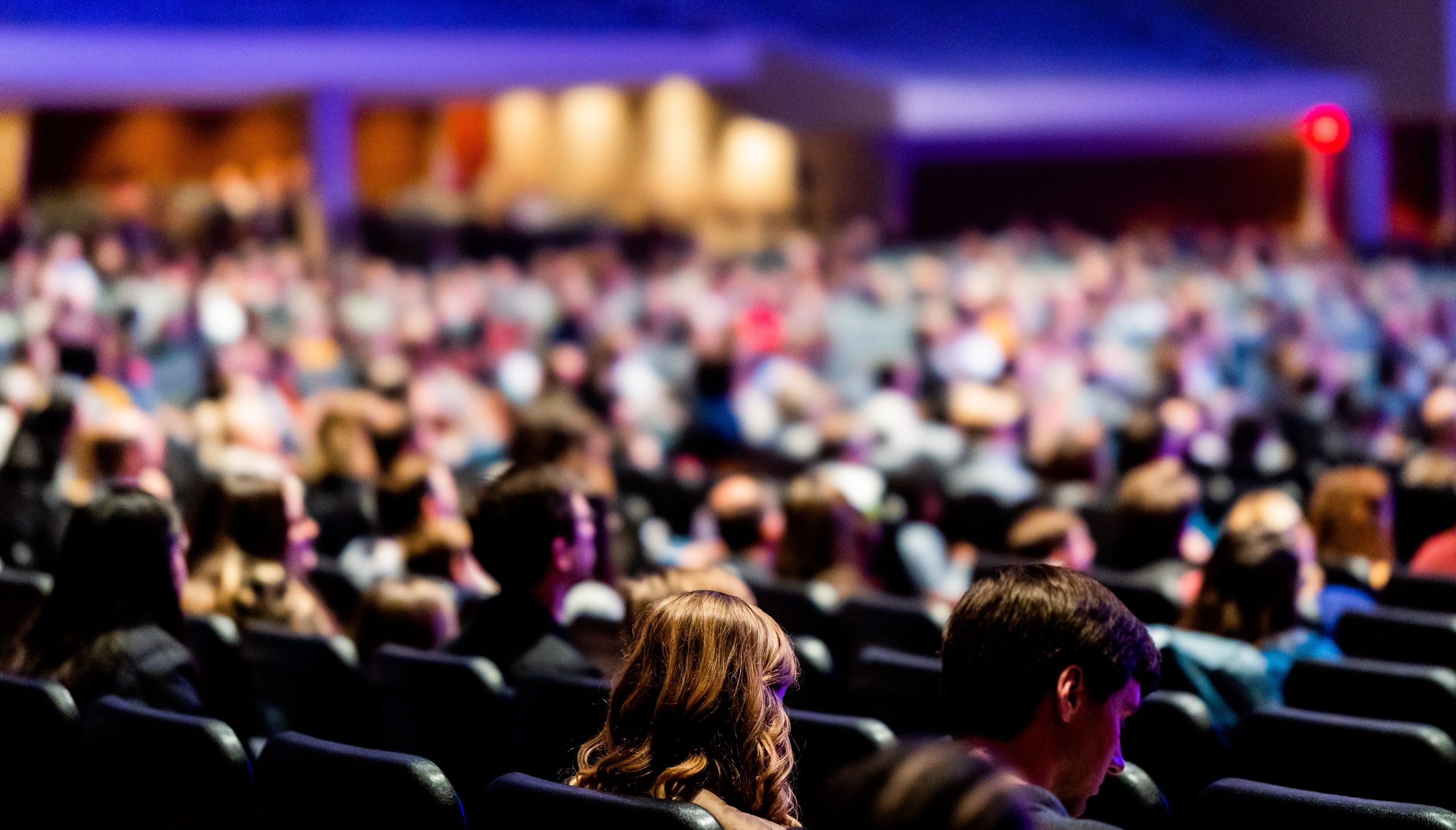
I had the privilege of presenting online this week to the International Conference on Traditional Medicine and Integrative Health in Barcelona. Many practitioners, researchers, clinicians, and educators from many cultures, lineages, and professions all gathered around a shared question: How do we care for human beings more wisely?
I was asked to present my work on Origins Theory, an Ayurvedic and integrative framework for understanding the modern menopause crisis. I left the conference with something intangible, but deeply important: I left with the ojas of the moment.
In Ayurveda, ojas is often described as our deepest reserve of vitality, coherence, resilience, and life force. It is what gives steadiness to the mind, endurance to the body, warmth to connection, and meaning to our work. And that is, in many ways, what I felt in the conference: it was not simply a conference full of information, but a diverse group of people bringing genuine vitality to the questions that matter.
We were eager to present. Eager to receive. Eager to listen, challenge, learn, and connect.
And it made me think:
What do we actually do with all of this knowledge once we leave the room?
How do we turn information into wisdom?
How do conferences like these shape not only our research or our businesses, but the way we practice, live, and serve?
I don’t think the answer is simply “learn more.”
We are not short on information.
We are short on integration.
The Message I Brought to Barcelona
My presentation, Origins Theory, is an attempt to translate the Ayurvedic understanding of Rajonivrutti—the natural transition of menopause—into the language of contemporary integrative medicine. At its core is a simple but provocative question:
Why has a natural life transition become so difficult for so many modern Western women?
Ayurveda has never viewed menopause as a disease. It is not, in its deepest sense, a failure of the female body. It is a transition: a movement from the years of production, responsibility, and outward output into a stage of life associated with reflection, refinement, mentorship, and wisdom.
And yet many women today experience menopause not as a natural transition, but as a collapse.
Hot flashes. Insomnia. Anxiety. Weight gain. Brain fog. Metabolic dysfunction. Identity distress. A sense of having lost oneself.
Origins Theory asks us to look deeper.
Instead of reducing menopause to declining hormones alone, it proposes that symptom severity often reflects cumulative disruption across multiple layers of life—the physical body, the environment, the nervous system, the social world, inherited stress patterns, identity, purpose, and the meaning we make of aging itself.
In simpler terms:
For many women, menopause is not hard just because estrogen is changing.
It is hard because the body is carrying too much.
Too much stress.
Too little rest.
Too much disconnection from circadian rhythm, food quality, community, and purpose.
Too many years of over-functioning, caregiving, striving, producing, and adapting to systems that rarely support women in becoming elders.
So the question shifts from:
“What’s wrong with her hormones?”
to
“What has this woman been carrying for decades—and what would it take to truly support the transition she is in?”
That shift matters, because it changes the entire clinical conversation.
What the Layperson Can Take From This
You do not need to know Sanskrit or Ayurvedic Medicine to understand the heart of this.
Most people already know, intuitively, that health is not built in one compartment.
We know that a body under chronic stress behaves differently.
We know that grief affects sleep.
We know that loneliness affects physiology.
We know that food, movement, work, relationships, and meaning all shape how we feel.
We know that there are seasons in life that ask us to become someone new—and that resisting those transitions often creates suffering.
This is where traditional medicine still has so much to teach us.
It reminds us that the body is not malfunctioning in isolation. It is responding to a life. To an environment. To a history. To a culture. To a nervous system. To a set of expectations about worth, productivity, and aging.
And when we begin to see health this way, something changes.
We stop asking only, “What symptom do I need to suppress?”
We begin asking, “What is this symptom asking me to pay attention to?”
Where is the depletion?
Where is the excess burden?
Where has rhythm been lost?
Where has meaning been forgotten?
What part of life is asking to be re-connected to ourselves?
That is as relevant to menopause as it is to nearly every chronic condition we are trying to navigate today.
What I Learned in Barcelona Had Less to Do With Data Than With Energy
Of course, conferences matter because they bring us research, new models, evidence, and challenge. They absolutely can help our research, our collaborations, and our clinical thinking.
But I think the deeper value of this gathering was something else. It was the palpable vitality in the moment.
People from different healing traditions and professional worlds were not gathered there to defend a single ideology. They were gathered because they care deeply about the future of medicine. You could feel it in the eagerness to share, in the care people took with their questions, in the generosity of conversation between sessions, and in the willingness to let ancient frameworks and modern science sit at the same table. That matters.
Because wisdom does not arise from information alone. It arises from relationships.
It arises when knowledge is tested in practice.
When one discipline humbles another.
When a clinician hears a researcher say something that sharpens their observations.
When an herbalist, physician, psychologist, and traditional practitioner discover they are all naming different parts of the same human experience.
When we allow ourselves to be changed by what we hear.
To me, that is what these conferences can offer at their best: not just more knowledge, but more coherence.
A stronger field of inquiry.
A stronger field of connection.
A stronger field of purpose.
In Ayurvedic language, perhaps even a stronger field of ojas.
So What Do We Do With All of This Once We Go Home?
This is the question I am sitting with after the Barcelona conference:
What do we do with all we’ve taken in?
We practice with it.
We question it.
We refine our research for it.
We let it challenge our assumptions.
We let it make us more honest about the limitations of our own lens.
We bring it back to the patient in front of us and ask: Does this help me see more clearly? Does it help me care more truthfully?
And for those outside the clinic, I think the question is similar:
How do we live in a way that turns information into wisdom?
Perhaps it begins by remembering that healing is rarely about a single fix. It is about tending the conditions that make resilience possible. It is about respecting life transitions rather than pathologizing all of them. It is about understanding that symptoms often emerge from a much larger story than the lab value or diagnosis alone can tell.
Menopause is one example of that. But really, so is life itself.
We are all carrying the task of translating what we know into how we live. Into how we care for our bodies. Into how we structure our days. Into how we hold one another. Into how we build medicine, community, and culture.
That, to me, is the work after the conference ends.
Not simply asking, “What did I learn?”
But asking:
What am I willing to embody now?
What am I willing to change in the way I practice, listen, and live?
How do I protect the ojas of what was shared so that it becomes something more than a lovely moment?
This conference reminded me that the future of medicine will not be built by information alone. It will be built by people willing to turn knowledge into wisdom—through rigor, humility, relationship, and practice.