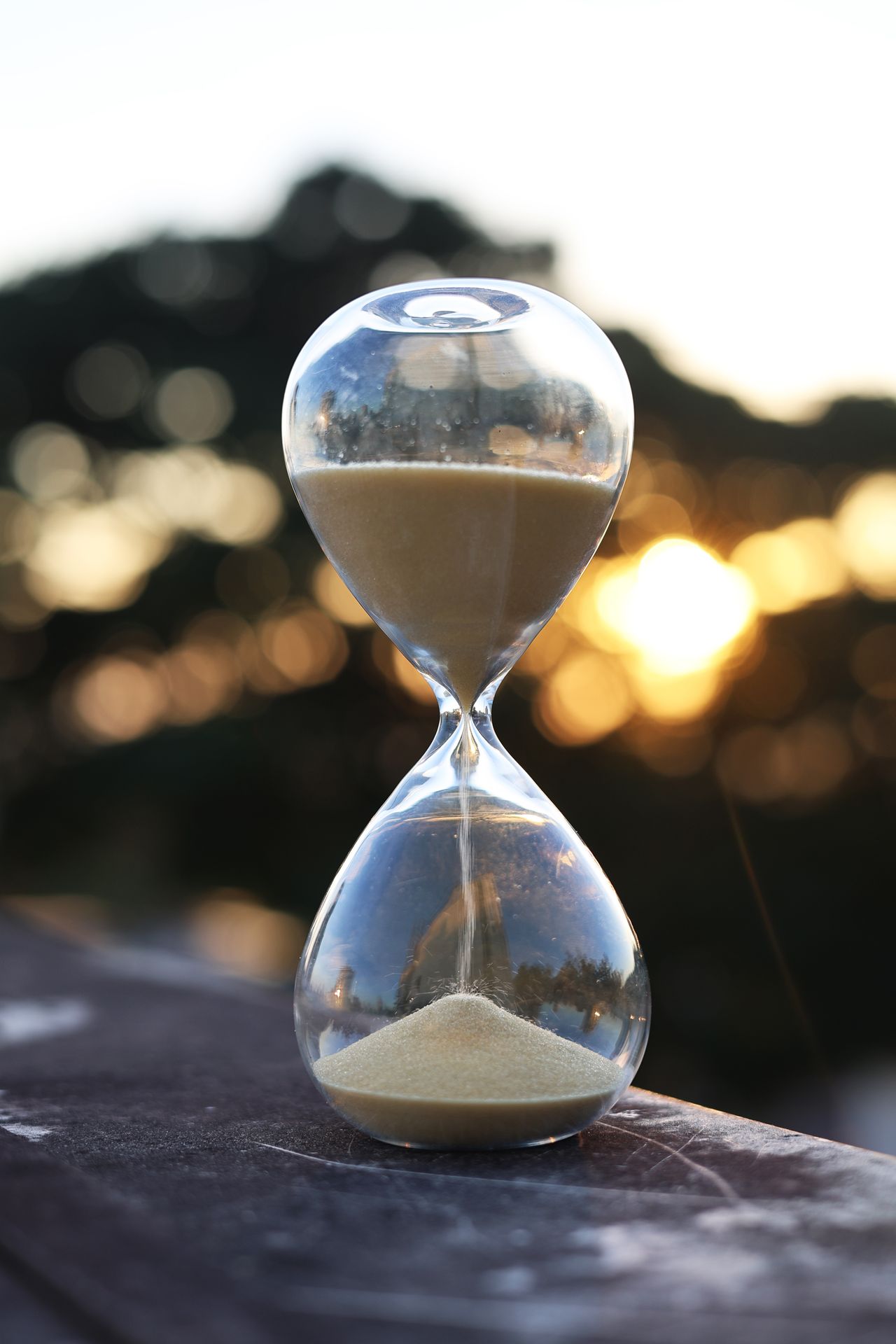
“I don’t have time.” It is perhaps the most common phrase I hear in clinical practice.
I don’t have time to exercise.
I don’t have time to cook.
I don’t have time to meditate.
I don’t have time to sleep more.
I don’t have time to take care of myself.
And yet, somehow, we always seem to find time for chronic pain, chronic fatigue, chronic inflammation, five doctor’s appointments, and a growing list of medications.
There is no judgment in that observation. In fact, I find it heartbreaking.
I don’t believe we have become resistant to health. I think we have become disconnected from time itself.
Recently, I’ve written about change, vitality, menopause, death and dying, prevention, and chronic disease. Zoom out, I’ve realized they all have one thing in common. I haven’t really been writing about health at all. I’ve been writing about time.
Ayurveda has been teaching us about time for thousands of years. The Sanskrit word Kala is often translated simply as time, but its meaning is far more profound than the passing of minutes on a clock. Time in Ayurveda is biological. It is dynamic. It is change itself.
Everything is moving through time. Nothing is static. You’re either tonifying or purifying, nourishing or depleting. Adapting or compensating. Healing or becoming increasingly disconnected from balance. The question has never been whether change is happening. Change is inevitable. The only question is: which direction are we changing?
Modern medicine has become remarkably good at moments. It asks important questions such as:
How quickly can we fix this?
What intervention is needed?
What symptom needs suppressing?
Ayurveda asks a different question altogether:
Where is time taking you?
The distinction may seem subtle, but I believe it is one of the greatest differences between how we understand health today and how Ayurveda has always understood it.
We’ve become extraordinarily uncomfortable with biological time. We live according to productivity time, technological time, pharmaceutical time, and convenience time. We want overnight shipping, thirty-day transformations, immediate relief, and instant gratification. We have become so accustomed to asking how quickly something works that we’ve forgotten to ask where it is leading us.
The irony is that our biology has remained wonderfully ancient. Your hormones don’t know you’re busy. Your liver doesn’t care about quarterly reports. Your microbiome isn’t interested in your productivity goals. And your nervous system has absolutely no understanding of your need for multitasking. Biology remains ancient despite our modernity.
Perhaps this is why chronic disease continues to rise despite unprecedented advances in medicine. We have become remarkably efficient at saving time while simultaneously borrowing against our future health. We negotiate with time as though biology is willing to renegotiate its terms with us. It isn’t.
One of the foundational concepts in Ayurveda is Prajñāparādha, often translated as “the mistake of the intellect” or “the crime against wisdom.” Traditionally, it refers to acting against what we know to be true. We know sleep matters. We know movement matters. We know nourishing food matters. We know relationships matter. And yet, we continually act otherwise.
I’ve begun wondering if there is another layer to this teaching that feels particularly relevant today.
What if Prajñāparādha is also acting as though we are exempt from time?
I’ll sleep later.
I’ll eat better next month.
I’ll exercise when life slows down.
I’ll deal with my stress eventually.
I’ll take care of myself someday.
Someday is perhaps one of the most dangerous words in modern medicine.
Because chronic disease doesn’t happen someday. It happens slowly and quietly through thousands of seemingly insignificant moments unfolding through time.
No one wakes up chronically inflamed. No one wakes up metabolically unhealthy. No one wakes up disconnected from their vitality. These are relationships that have unfolded through time.
And thankfully, so is healing.
This is where I believe we’ve misunderstood health itself. We speak about health as though it is something we’re trying to acquire—a destination waiting patiently for us at the end of enough discipline and sacrifice. I no longer believe that’s true.
Perhaps health isn’t something we spend time acquiring. Perhaps health is the natural consequence of participating appropriately in biological time.
That feels profoundly different to me.
A tree doesn’t spend time becoming a tree. It simply participates in being what it is. Nature is never in a hurry, and yet accomplishes everything it needs to. Human physiology is no different.
The greatest irony in clinical practice is that people don’t usually feel better six months later. They begin feeling better almost immediately.
They sleep better.
Their digestion improves.
They’re calmer.
They laugh more.
They’re waking up before their alarm clock.
They’re less reactive with their children and partners.
Then, six months later, they come into my office and say some version of the same thing I’ve heard hundreds of times: “I forgot what it felt like to feel this good.”
That sentence has become one of my favorites in medicine. Not because they feel good. Because they forgot.
I wonder if that is one of the great tragedies of chronic disease—not simply that we’ve become sick, but that we’ve forgotten what vitality feels like.
We’ve become so accustomed to surviving that we’ve lowered our expectations of what being human is supposed to feel like.
Perhaps this is why I resist calling Ayurveda alternative medicine. At its heart, Ayurveda is not a collection of herbs, detoxes, or personality types. It is a sophisticated model of living systems unfolding through time. It understands something modern medicine is beginning to rediscover through systems biology and chronobiology—that everything is connected, and everything is changing.
Time matters. Timing matters. Trajectory matters. Health is never static.
Which brings me back to the question I began with:
Is the cost of health your time?
I don’t think so. I think we’ve been asking the wrong question.
The cost of health isn’t your time. You’re already spending that whether you participate consciously or not. The question is not whether time is passing. The question is whether you are participating in where it is taking you.
Perhaps health was never asking for more of your time. Perhaps it has only ever asked for your participation.
One walk.
One meal.
One good night’s sleep.
One moment of stillness.
One small decision repeated often enough that it becomes your biology.
Healing and disease have something beautiful in common. Neither usually arrives all at once. They quietly accumulate in the seemingly insignificant moments that make up a life.
Ayurveda has always understood this.
It has never asked us to become different people tomorrow. It simply asks us to become conscious participants in who we are becoming today.
Perhaps we’ve never had a health problem at all. Perhaps we’ve had a relationship-with-time problem. And perhaps the greatest medicine available to us isn’t learning how to save more time, but learning once again how to belong to it.
If you’d like support reclaiming your relationship with time, and by extension, your vitality, let’s talk. Book a free 30-minute consultation with me, and we can explore how.